South Carolina has a storied military history. Its important role in the War for Independence often goes under recognized, and South Carolinians have served in many other wars fought by the United States.
Its role in the Civil War, is a bit more well known, for better or for worse.
It was the first state to secede and the site of the first hostilities at Fort Sumter in Charleston. Many South Carolinians fought in the Civil War, and the South Carolina Confederate Relic Room and Military Museum in Columbia, in large part, commemorates that participation.
However, it is not strictly a South Carolina Confederate Museum or even strictly a South Carolina Civil War Museum, which brings me to something I’d like to address before writing more about the museum itself and how to visit.
Does it Over-Glorify the Confederacy?
Hopefully without stepping too deep in a pile of politics, it’s no secret that the legacy of the Civil War, especially in the south, including South Carolina, is, well, complicated.
This is partly due to the fact that people have a tough time saying their ancestors fought for a inherently immoral cause. Probably more importantly, it’s also due to a very intentional and very successful creation of myths around the Confederacy later, commonly referred to as the Lost Cause myth.
This isn’t the place to get into a long discussion of that, but this museum’s origin, originally opened in 1896, is very much a testament to the creation of the Lost Cause myth in the years following the end of Reconstruction and reimposition of white supremacist rule in the south. I feel pretty darn confident in saying this museum most likely was created to over-glorify the Confederacy.
Today, I think it’s a bit more nuanced.
I would say around a third of the museum is devoted to the Civil War. Most of that third is devoted to Confederate artifacts, which does make sense given that most South Carolinians who fought in the war fought on the Confederate side.
However, something I really appreciated is there is a recognition that some also fought on the Union side.
There is a small, but well done exhibit on the formerly enslaved black South Carolinians that served in the Union Army. The 1st and 2nd SC Volunteer Infantry Regiments, later renamed the 33rd and 34th Colored Troops Infantry Regiments, participated in a number of battles in the closing years of the war.
The 2nd SC Volunteers even raided plantations with Harriet Tubman.
The remnants of a flag of the 2nd SC, the only known surviving example of a flag from any of the 7 SC black regiments is, in my opinion, one of the highlights of the museum.
There is also a neat flag from an African-American regiment of mostly SC residents in World War One on display.

So, that was a very long way of saying, no, I don’t think this museum over-glorifies the Confederacy today even if it mostly likely originally did. There is an inclusion of all South Carolinians’ experiences in war in the museum.
In other words, I don’t think you need to be some modern day Confederate apologist or sympathizer to come her and not feel icky. And, there are lots of other artifacts on display from other wars.
So even if you’re not particularly interested in the Civil War, if you enjoy military history in general, you’ll get a lot out of a visit here. Personally, I kind of wish they would just change the name to the SC Military Museum (I guess there is already a museum named that, but still).
Ok, with that out of the way, let’s talk about actually planning your visit to the SC Confederate Relic Room and Military Museum.

*Disclosure: This post contains affiliate links, and I may earn from purchases made after clicking those links. Disclosure Policy.
What to See at the Museum
As I alluded to above, a large portion of the museum is dedicated to the Civil War, in particular to Confederate artifacts but also artifacts from before and after the Civil War.
There are a number of really neat historic flags on display both from the Civl War as well as the War for Independence and the Mexican-American War. Most of them are regimental flags, but there is at least one Confederate national flag as well.

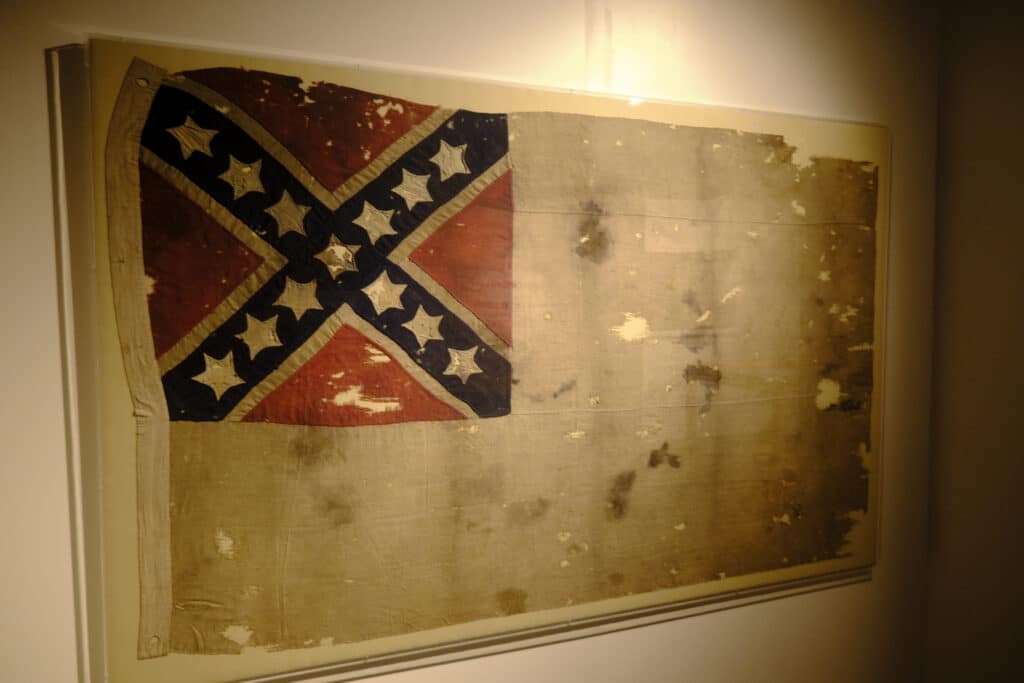
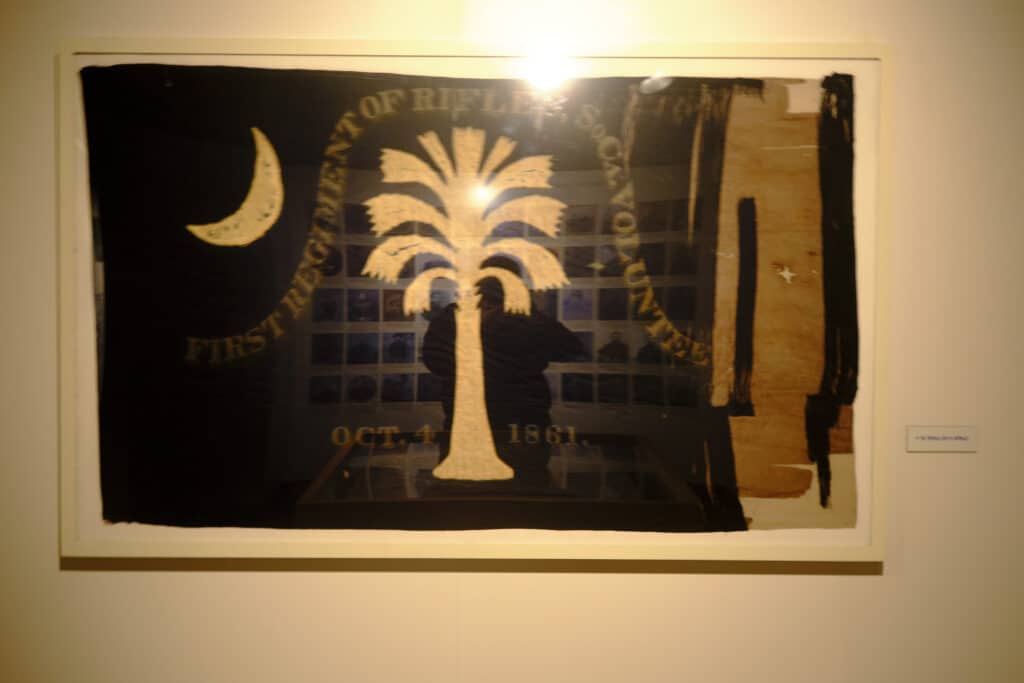
And of course, there are plenty of artifacts like uniform buttons, rifles, and bullets.
I actually thought one of the more interesting exhibits was one on a Civil War era field surgeon’s kit. It definitely made me thankful for being born 120+ years later and for modern medicine!
There are some smaller exhibits on the Spanish-American War and World War I. Then there is a small but slightly larger section dedicated to World War II. There is a neat model as well as a flag and some artifacts from the WWII Cruiser USS Columbia, named after South Carolina’s capital city.
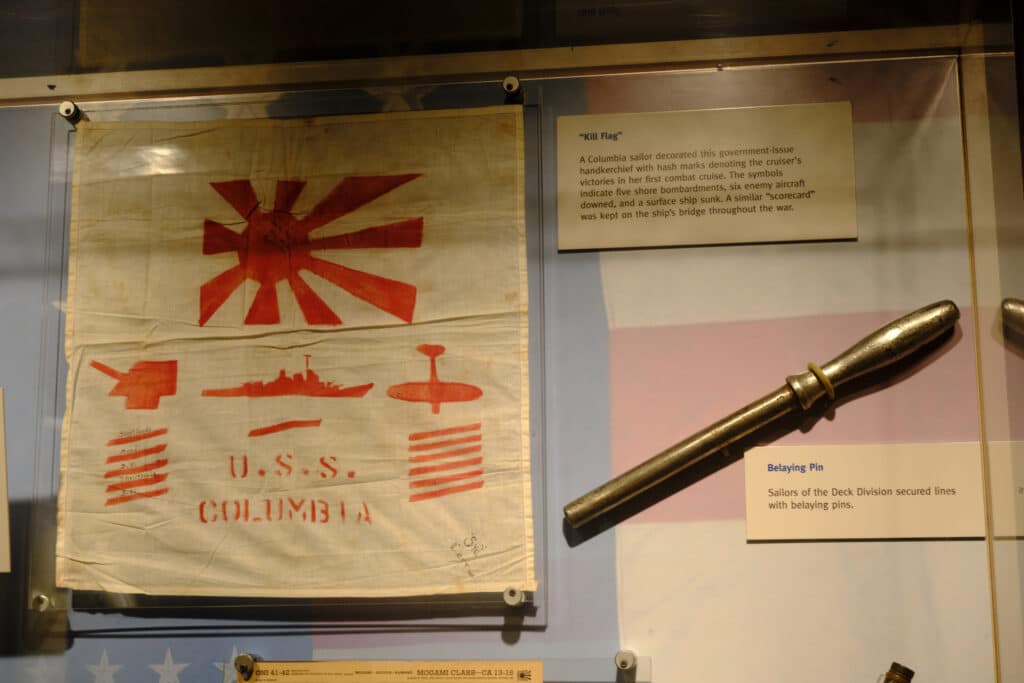
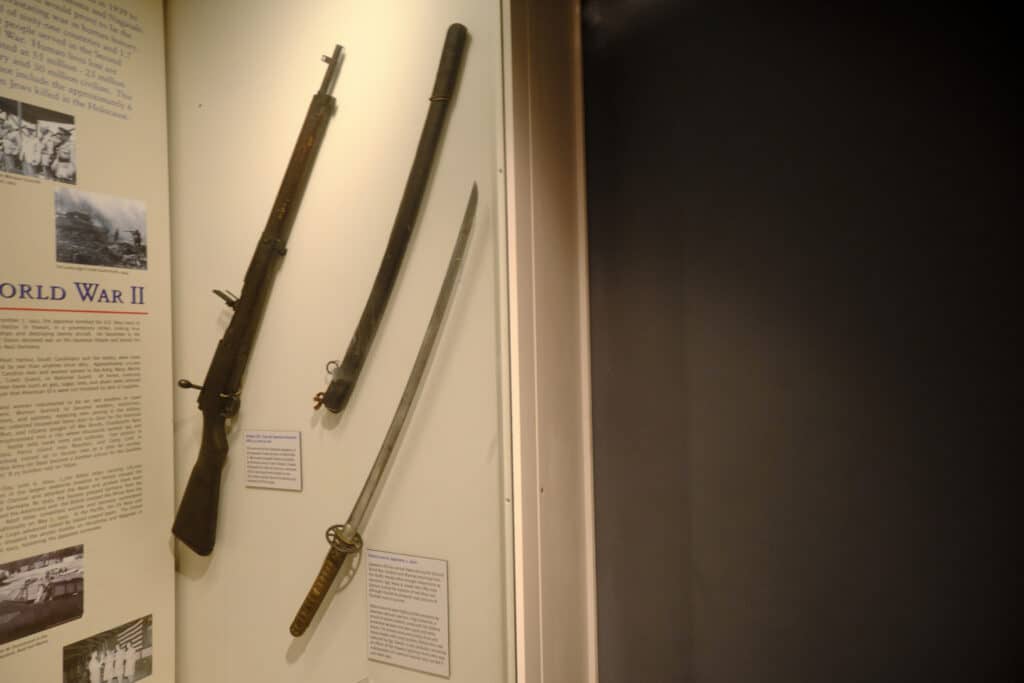
However, arguably the museum’s most unique and impressive artifact, is a Katana Samurai Sword that a South Carolinian soldier claimed from a Japanese officer on Iwo Jima.
The sword supposedly dates to the 1600s, which means it had probably been passed down for generations within that family, and an ancestor must have been a samurai.
According to the attendant at the ticket counter, it was rated to be able to cut through 3 bodies in one slash.
In a separate section, there is a large exhibit on Vietnam.
I guess in many ways, Vietnam has some parallels to the Civil War in that it has a complicated legacy. I think the exhibits here do a pretty good job of presenting the war’s complex causes and legacy.
Of course, the focus is on the combat experience of US soldiers.
There are lots of neat artifacts on display here and some nuanced and interesting discussions of things like the mechanical problems with M16s compared to AK-47s in the environment of Vietnam.

I found a chart that shows whether you would have been drafted based on your birthday interesting as well (I would have been drafted; again thankful to have been born a little later!).
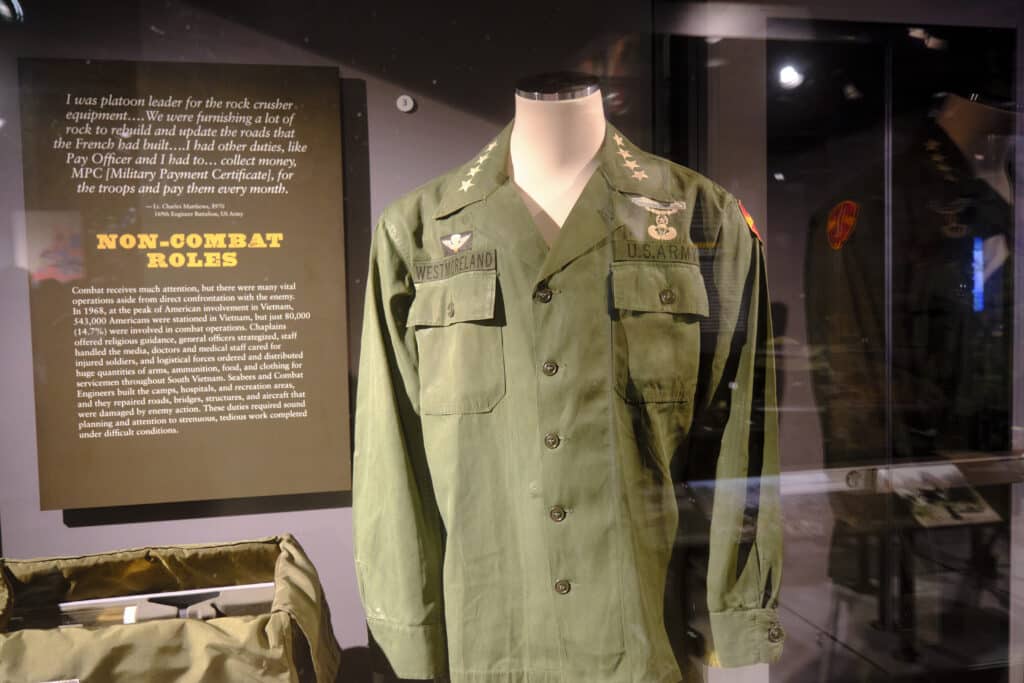
I have to be perfectly honest, I did not realize General William Westmoreland was from South Carolina. The Spartanburg native oversaw much of the US war effort during the Vietnam War.
There is a uniform that belonged to Westmoreland as well as a number of other artifacts that belonged to him on display.
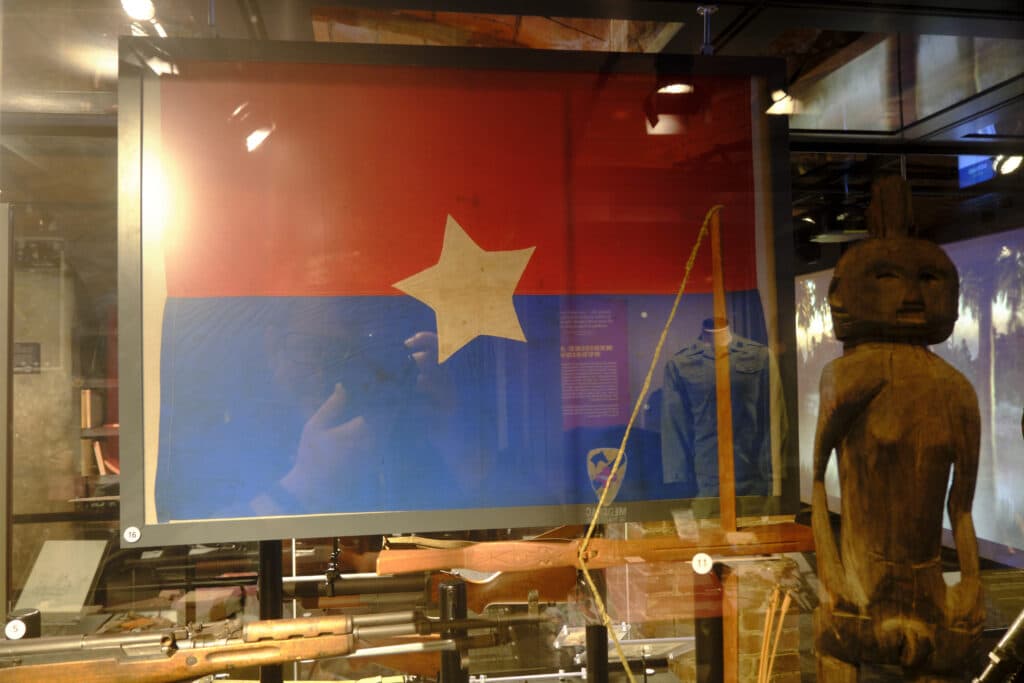
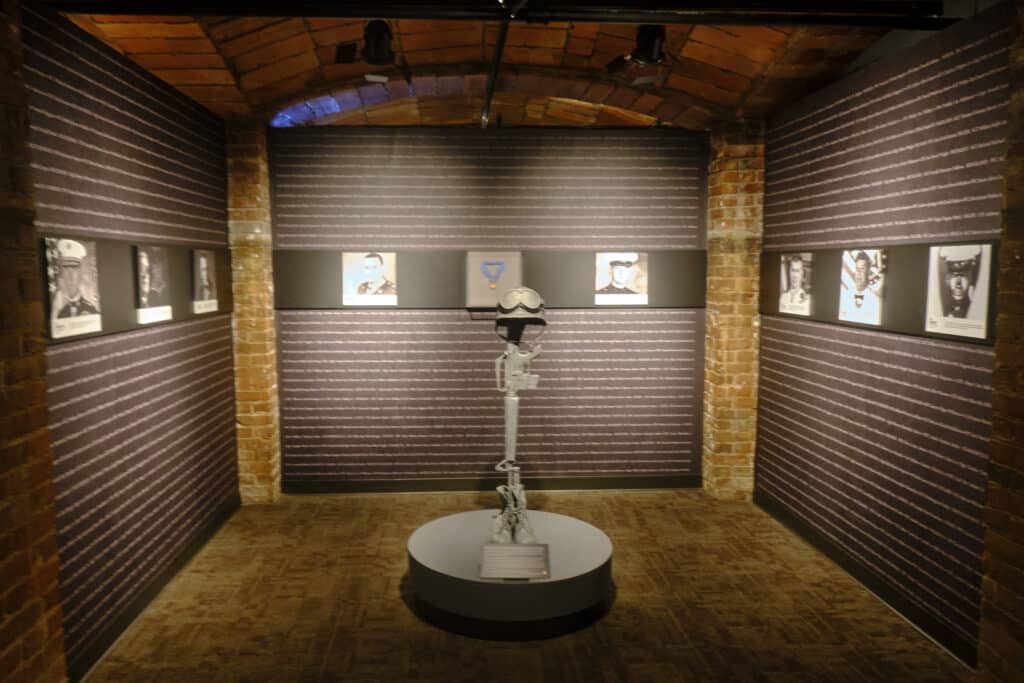
Some other highlights of this Vietnam War exhibit are a helicopter door, a Vietcong flag that was captured at some point, and a well done memorial to the South Carolinians that died during the war, including a number of Medal of Honor recipients.
So, there’s a fair amount to see at the South Carolina Confederate Relic Room and Military Museum.
It certainly is more than just a South Carolina Confederate Museum or South Carolina Civil War Museum. In fact, the Vietnam section is probably larger than the Civil War section.
How Long to Spend at the Museum?
I’d say most people will spend 1-2 hours here.
If you’re just passing through and glancing at the artifacts and highlights, you could probably do a quick walk through in half an hour. If you read everything in detail, it might take you a little over 2 hours.
If you’re planning to see the SC State Museum or EdVenture Children’s Museum too, I’d plan on a half day. For all three, I’d probably plan for close to a full day.

SC Confederate and Military Museum Hours
- Tuesday-Saturday: 10 am to 5 pm
- Closed on Mondays
- Closed on Sundays except for first Sunday of the month open from 1 to 5 pm.
The museum is open on Veterans Day and Confederate Memorial Day but closed on other State holidays.
Admission Prices
- Adults (18-61): $6.00
- Seniors (62+): $5.00
- Active Military and Veterans: $5.00
- Children (10-17): $3.00
- Children 9 and under: Free
If you are also visiting the SC State Museum (located in the same building), you can add on a ticket to the SC Confederate Relic Room and Military Museum for $4 when you purchase your admission to the State Museum.
You can learn more about visiting the main museum in my visitor’s guide to the SC State Museum.
On the first Sunday of the month, admission is $1 for everyone. Keep in mind the SC State Museum also has $1 admission on the same day, so it’s a great chance to see both of them!
There is a large parking lot, and parking is free.
You can double check the hours, ticket prices, and dates the museum is closed at its website.
Getting to the Museum
As I mentioned above, the museum is located inside the same structure as the SC State Museum in a large historic building that used to be a mill. The museum is located on the backside of the first floor.
The address is 301 Gervais Street, and it is located just across the bridge over the Congaree River from the West Columbia/Cayce area.
It can be easily reached via interstate I-126, or Highways #1 and #378.
If you’re looking for a place to stay near the museum, the Cambria Hotel and Aloft Hotel make for excellent choices. You can also check out my list of the best Columbia, SC downtown hotels for more options, and even the hotels near the Columbia airport would also offer easy access.
Planning your visit to Columbia, SC?
If you do end up visiting the South Carolina Confederate Relic Room and Military Museum, I hope you find it interesting, and that this guide helped you plan your visit.
I definitely recommend checking out the SC State Museum while you’re here, and the EdVenture Museum is worth it if have young children.
I also can’t recommend planning a visit to Riverbanks Zoo enough while in Columbia.
If you’re looking for more options for where to stay in Columbia, you can check out my list of the best Columbia luxury hotels and the best pet friendly hotels in Columbia.
Cheers and Happy Exploring!