*Disclosure: This post contains affiliate links, and I may earn from purchases made after clicking those links. Disclosure Policy.
Riverbanks Zoo is possibly Columbia, SC’s best attraction, especially for families and kids.
Before visiting you might be asking yourself what animals can you see at Riverbanks Zoo?
The nice thing about the list of animals at Riverbanks Zoo is that there’s a mix of classic favorites you’ll see in most zoos plus a few fairly unique ones.
In this post, I’ll cover all the Riverbanks Zoo animals and share some photos as I go through the list of animals at Riverbanks Zoo, including sharing which ones are our favorites as well as the most unique.
That way you’ll know exactly which animals you’ll be able to see and be able to prioritize seeing the animals at Riverbanks Zoo that are most important to you.

Riverbanks Zoo Animals Overview
Growing up here in Columbia, I went to the zoo many a time.
One of the things I loved back when I was a kid and love even more now that we have a child is that Riverbanks Zoo is so well done.
It isn’t overwhelmingly big or underwhelmingly small. You can spend anywhere from half a day to an entire day here.
While Riverbanks Zoo’s animals cover most, if not all, the bases of animals you’ll typically look for in a zoo, there are also some animals at Riverbanks Zoo you don’t see at every zoo.
Some of list of animals at Riverbanks Zoo that are most unique and among our (or well, better said our daughter Aaliyah’s) favorites include:
- Gorillas
- Koalas
- Grizzly Bear
- Tiger
- Otters
- Giraffes
- Rhinos
- Sea Lions
However, there are many more, too!
Below, I’ll cover all the Riverbanks Zoo animals, so you know exactly what to to expect to see on your visit.
You can check out a complete Riverbanks Zoo map here (in pdf form) to see where each animal is located too, by the way.
You can also check out my complete visitors guide to Riverbanks Zoo to fully plan your visit.
I’d also encourage you to check out my explanation of the Riverbanks Zoo membership levels if you live in the area and think you’ll visit the zoo enough to get to know the animals as well as we do, or, really, just more than a couple times a year.
Animals at Riverbanks Zoo Deep Dive
It’s hard to know sometimes what people would prefer in a guide like this.
Do they prefer just a simple list of animals at Riverbanks Zoo?
Do they want a guide to the best times or seasons for seeing the Riverbanks Zoo animals?
Do they want photos or prefer seeing them themselves?
Are they frequent visitors and only want to know about Riverbanks Zoo’s new animals?
I’ve tried to address all those questions in this post.
I’ll list the animals at Riverbanks Zoo along with, where relevant, thoughts on seeing them and when there are enrichment activities and feedings, with a bit of an emphasis on both the animals you don’t see at every zoo but also which ones are Aaliyah’s favorites, which are, naturally, where we spend the most time.
List of Animals at Riverbanks Zoo
I’ve ordered this list of animals at Riverbanks Zoo by a combination of unique, cool factor, and which ones are our personal favorites.
That is, of course, subjective, so don’t necessarily consider this a ranking.
I’ve made sure to mention where to find each of the Riverbanks Zoo animals and included photos where I have good ones (so some spoilers ahead!).
If you want to see some suggested routes to explore the zoo, be sure to read my visitors guide, linked above.
However, your route should, at least partially, be determined by which animals you want to prioritize, something I hope this guide will help you do.
Gorillas
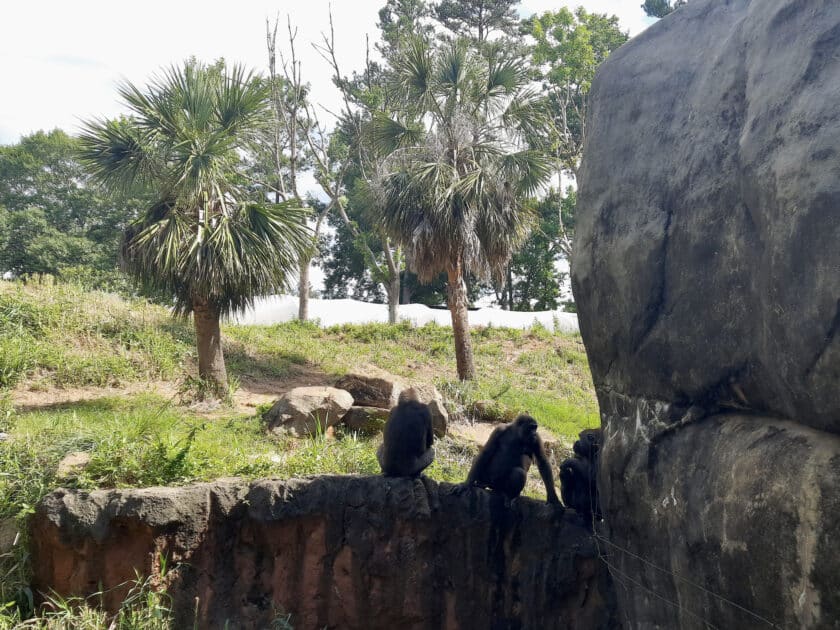
Honestly, this is probably Riverbanks Zoo’s most unique attraction!
You don’t see gorillas at every zoo, much less practically an entire troop of them.
However, you’ll find one among the Riverbanks Zoo animals!
The gorilla exhibit is also just really well done.
They have one of the largest, if not the largest, habitats at the zoo.
There is a building with an inside viewing area through glass where you can see both some of their outdoor habitat as well as a small inside area, where there are ropes for the gorillas to climb on.
Oh, and they also have hammocks, just in case you really need to be jealous.
This inside area is located not far to the left from the main entrance to the zoo, past the kangaroo walkabout and habitat.
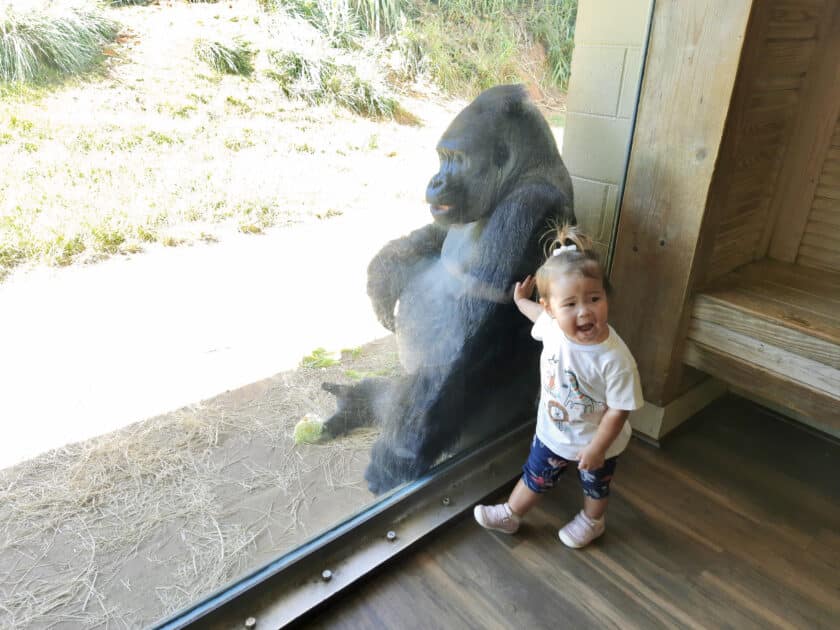
If you go outside this building and through the monkey cave (more on it near the end below), there are a few more good areas to view the gorillas outside.
Our experience is the best views are through the glass in the inside area when the gorillas are congregated there or nearby, but we also frequently see them from the outside viewing area.
Look closely at the treehouse, tower, thing they have for them, because sometimes they are up there just chilling, and they blend in better than you might think for such large animals.
Some of them also post up on rocks around the edge of the habitat out here.
So, I’d recommend taking a peak at at the inside area (usually you can tell if they’re there by how many people are or are not mulling around). If you don’t see them, don’t despair, and head through the cave and look out on the other side.
Note that they do a gorilla enrichment activity in the afternoon. This is a good chance to see all of them by the main inside exhibit, as well as to hear a keeper share details about them or ask questions.
The gorilla enrichment activity was scheduled at 1:30 pm the last time I confirmed it in September 2025.
Zoo maps are available on request at the entrance and should list the times of feedings and enrichment activities.
\Pretty much everyone we’ve ever interacted with at the zoo is also super nice and I’m sure would be happy to confirm the times if you asked them.
Koalas

This is another animal you don’t see at every zoo. They are pretty darn cute too and definitely among the highlights of the Riverbanks Zoo animals.
Riverbanks Zoo currently (see the last updated date at the top of the post) has two koalas.
They are housed inside in a special habitat with some eucalyptus trees. You can find it heading to the right from the entrance, past the bear, baboons, and tigers, and across from the carousel.
In my experience, the koalas are often sleeping. However, we’ve seen them a number of times be more active, crawling around in their trees to find the yummiest eucalyptus leaves to munch on.
We saw one climb down the ground the walk around one time in a real treat!
I don’t have any good tips on the best time to see them active, it seems to just vary.
So, pop your head in, and if they are asleep, well, they are still pretty darn cute to look at, or you could come back later and see if you have better luck to see them moving around.
River Otters

The otters are another favorite of most kids (actually Aaliyah likes them but isn’t obsessed with them like the next Riverbanks Zoo animal on this list).
There are two otters, and when they are active, they really are fun to watch.
They swim around, often coming really close or even pushing off the glass where you can watch them. They sometimes run, roll around, and wrestle on the dry land too.
You can find the otters immediately to the right just past the entrance.
Butch the Grizzly Bear
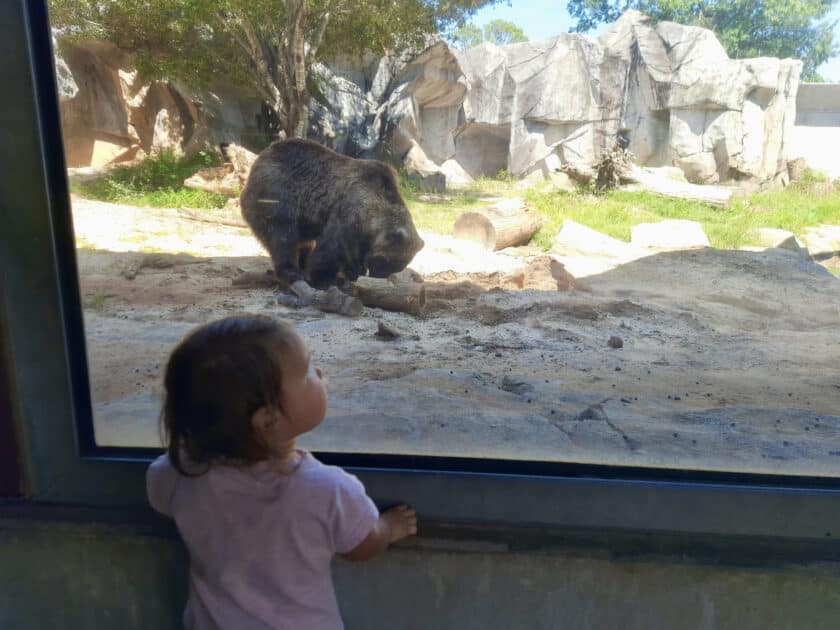
Past the otters, you’ll find the Riverbanks Zoo grizzly bear, whose name is Butch.
Butch, and really bears in general, are Aaliyah’s current favorite animals. She loves seeing him, and will tell everyone she sees for days or even weeks about what he was doing after a visit.
Usually, she tells them that he was asleep!
That’s because, well, he is quite the lazy bear!
Honestly, it’s hard not to envy him a little when he’s curled up with one paw over his eyes and another up in the air or resting on the glass.
Seems like a good life!
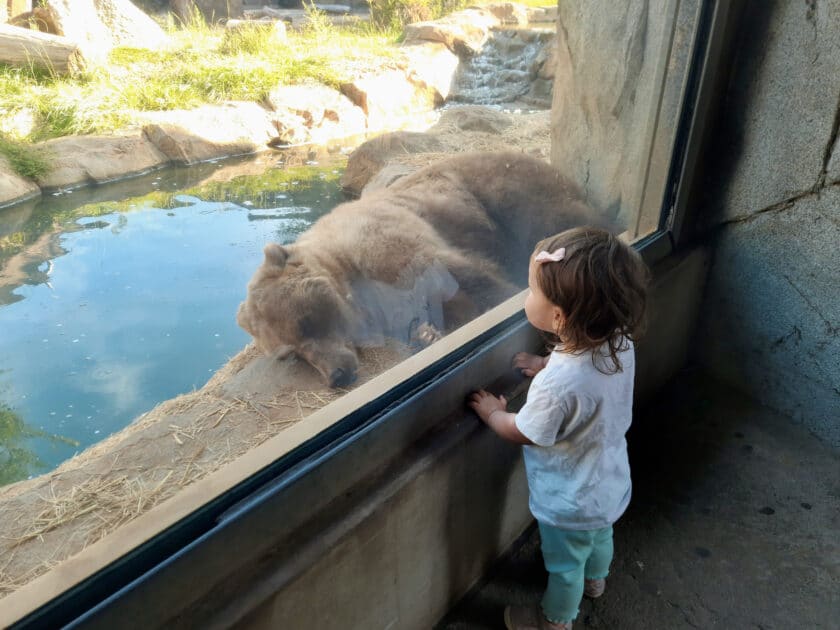
I haven’t figured out a particular schedule he sticks too, but he tends to be more active when the weather is not too hot or too cool.
We got really lucky one time and saw him dig up a bucket with food (the keepers do this as part of his enrichment) before wandering over to collect some blueberries next to the glass.
That was around lunch time, but it doesn’t seem to be a consistent thing they do at a certain hour.
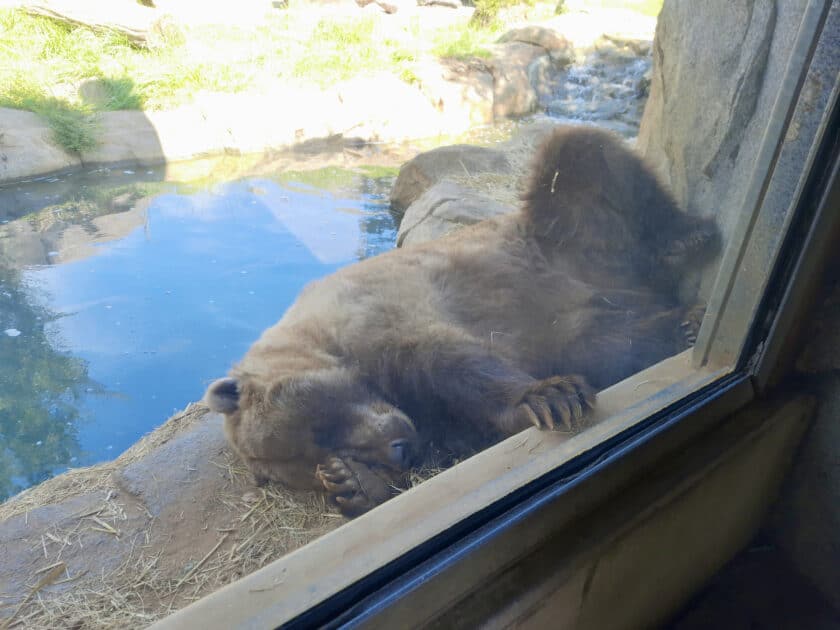
So, while there aren’t any regularly scheduled feedings or activities with the Riverbanks Zoo grizzly bear, there are often keepers by Butch’s habitat with replicas of a bear paw kids can touch and to answer questions.
We learned his name as well as the sad story of how he was brought to the zoo as a cub after his mother was killed shortly after his birth.
Lions (*no longer here)
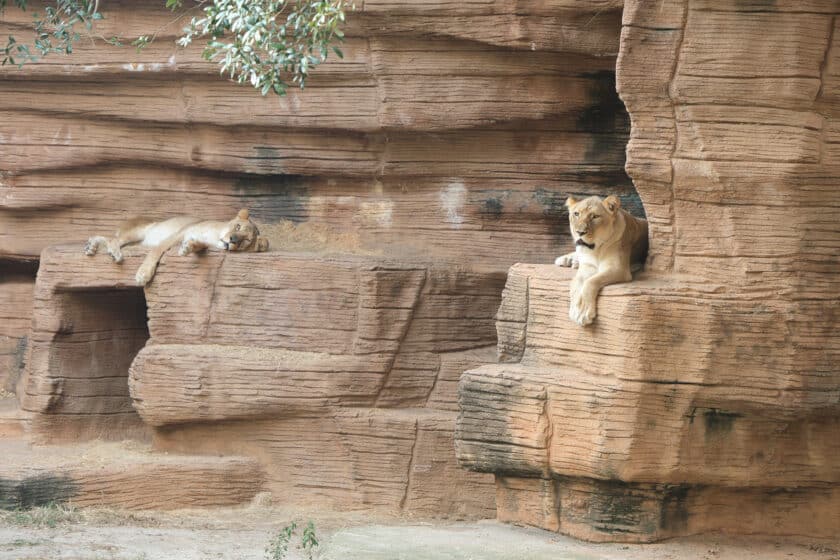
If you head past Butch’s area, you’ll pass the baboons and then come to the old lion habitat.
There were two female lions at Riverbanks Zoo named Thabisa and Lindelani.
There used to be a male lion named Zuri too, but he died in August 2024. Interestingly, he was the oldest lion in North America at the time of his death at just over 20 years old and fathered 13 cubs. He came to Riverbanks in 2005, when he himself was just a cub.
The two remaining lionesses were still at Riverbanks through October 2025. We enjoyed seeing them a lot. They were often hanging out in the shade under the trees on the left side of the habitat but also like to lay in the sun on the rocks.
However, according to this news report, they were permanantely relocated in early November 2025. That report says the zoo will welcome at least two new male lions after renovations as part of the zoo’s Bridge to the Wild expansion (more on that at the end of this post).
Tiger
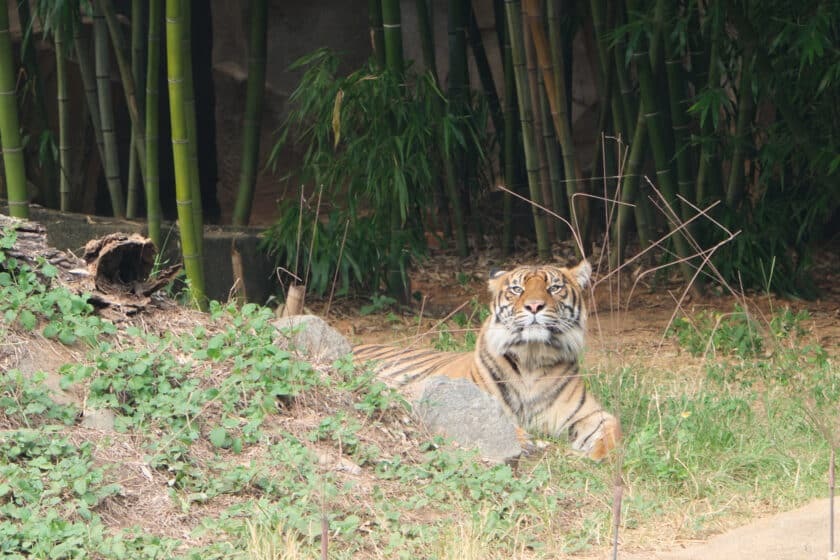
Past the old lion habitat, you’ll find the tiger habitat.
There has been a tiger at Riverbanks Zoo for as long as I can remember, and it’s always been a crowd favorite.
However, Koshka, the long time tiger Amur tiger at Riverbanks was put down in March 2025 due to a degenerative spinal disease that had caused her mobility and overall quality of life to decline to a point where the zoo decided euthanizing her was the best option.
Koshka was nearly 20 years old herself and arrived at Riverbanks in 2015.
For a while, the habitat sat empty.
However, a new tiger is among the newest of Riverbanks Zoo’s new animals.
She’s named Suci (pronounced Su-Chee), and she is a Sumatran tiger. Only 2 years old, she should hopefully be around for many years to come!
Suci arrived to the zoo in July of 2025, but was not regularly out in her habitat immediately.
We caught our first glimpse of her during a Riverbanks Zoo Members’ Night Out in September, when she was sitting out in the front of the habitat (the photo above is from that).
Shortly after that, Aaliyah and I started to see her more often during the day hiding in the back right corner of her habitat behind the bamboo, but she would occasionally walk around too, affording a lucky few glimpses of her in action.
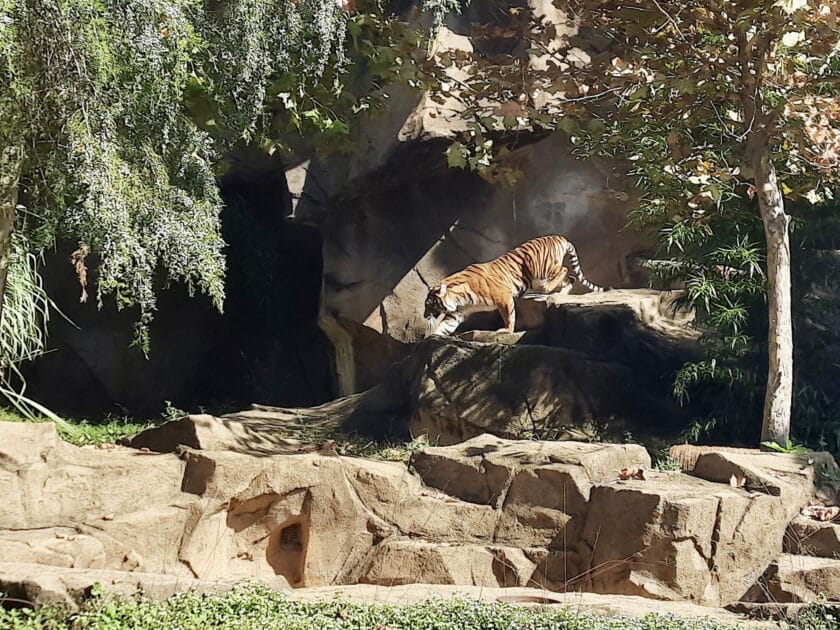
We also got to see her prowling around during Riverbanks’ Boo at the Zoo, which was really neat but a good reminder of why I wouldn’t want a tiger stalking me at night, or during the day either, for that matter!
So, your best bet to get a glimpse of her moving around is probably first thing in the morning before there are many guests since she seems shy, but I suspect she’ll be more and more active as she gets more comfortable in her new home.
Evening events are also a great chance to possibly see her move around more and get a good visual for your next nightmare.
Sea Lions and Seals
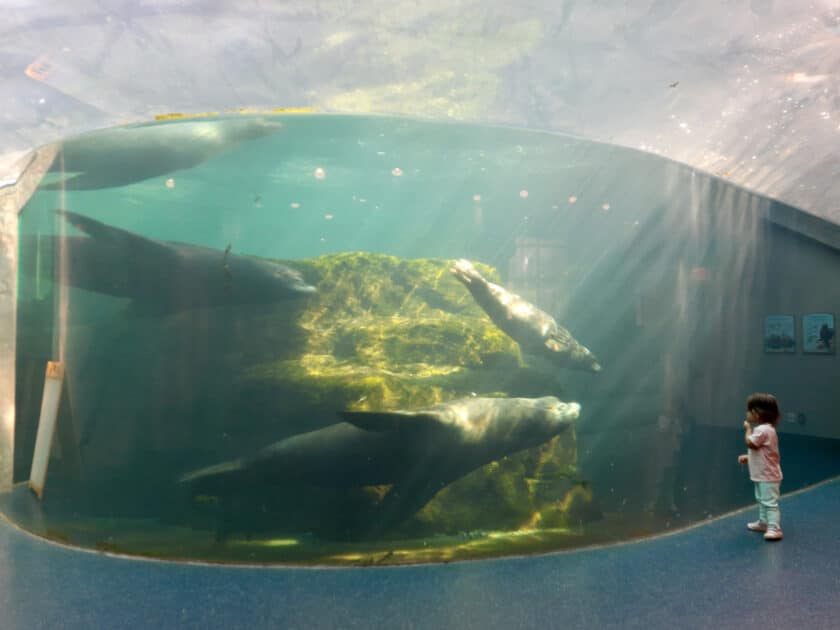
Next up is another current Aaliyah favorite: the sea lions and seals.
Funny enough, I have fond memories of watching the sea lion shows when I was a kid. They don’t do so much of a show anymore, but they have a really great viewing area.
Located at the center of the zoo, diagonal to the left from the entrance, there is a huge above ground tank with glass to see underwater and amphitheater style seating, an inside area with more amphitheater seating and underwater glass that is a bit deeper, and also an outdoor upstairs balcony viewing area.
I think the best place to see them most of the time is from the inside viewing area, and they often swim right in front of the glass.
You can see them along the surface really well up on the balcony area too.
While they don’t do as much of a show with tricks and stuff as when I was a kid, they do have a feeding and enrichment activity, where they get one or more of the sea lions to jump out on the platforms and do some stretching and stuff in addition to getting some fish to munch on.
Meanwhile, a keeper tells the audience about the animals.
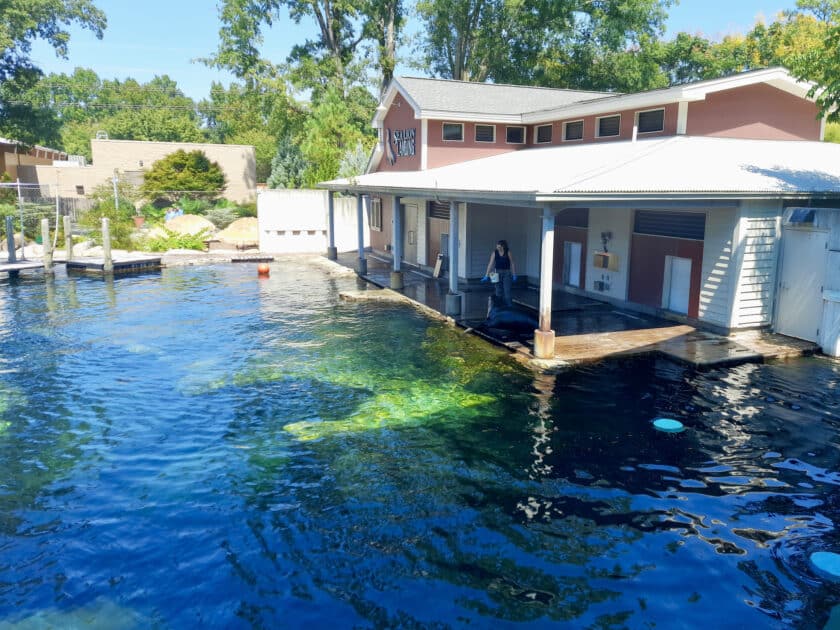
Depending on the angle of the sun and how murky the water is or isn’t, you’ll usually get a better from from the upstairs platform than the outdoor amphitheater in my experience.
It’s worth pointing out that for much of mid-2025 they were introducing a new sea lion and new seals.
So, they have a less frequent tank cleaning schedule and we’ve had several visits where it was hard to see much of anything under water, especially from the outdoor viewing area.
However, as the new animals get more accustomed, I imagine that will improve.
We’ve also noticed that all of them don’t always appear to be in the tank. I’m assuming that also has to do with them getting accustomed to each other as well.
However, we had one really lucky visit in late summer 2025 where we got to see all 3 sea lions plus the 2 seals that call the zoo hone in a pretty clean and clear tank. Aaliyah really loved watching them from the inside area, especially since there was almost no one else there!
Hopefully, that becomes the norm as they all settle in together.
Giraffes
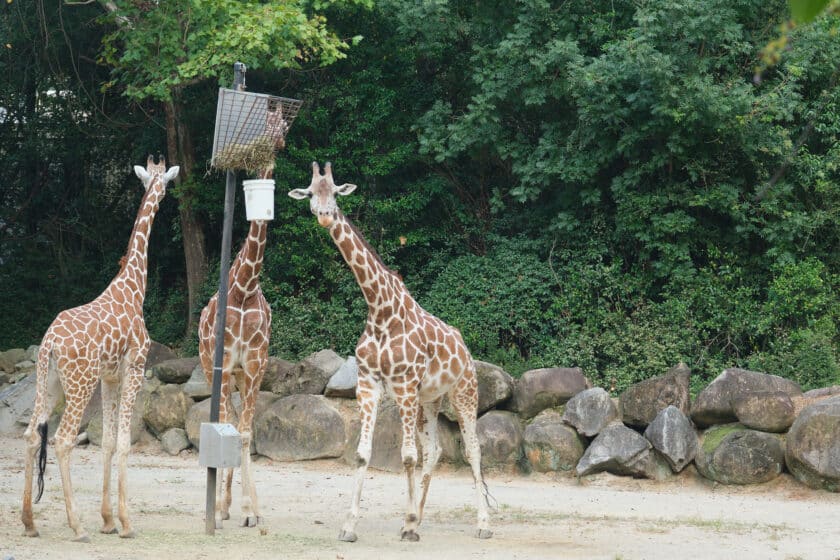
Another Aaliyah favorite. Not only does she love the giraffes, but she also loves feeding them (more on that below).
I actually think the giraffes are currently one of the highlights among Riverbanks Zoo’s animals. They have a really nice space and are pretty much always visible.
There are currently three giraffes among Riverbanks Zoo’s animals.
Bruce is the big one, who interestingly enough is a plasma donor. His donated plasma helps when giraffes give birth at zoo’s around the country, as we learned on a special giraffe barn tour during a Member’s Night.
I don’t recall the other giraffes’ names, but a keeper did tell me they expect to get at least one more soon.
There is a young giraffe right now who is really fun to watch too.
However, the highlight of the giraffes is definitely optional feeding activity.
Riverbanks Zoo Giraffe Feeding
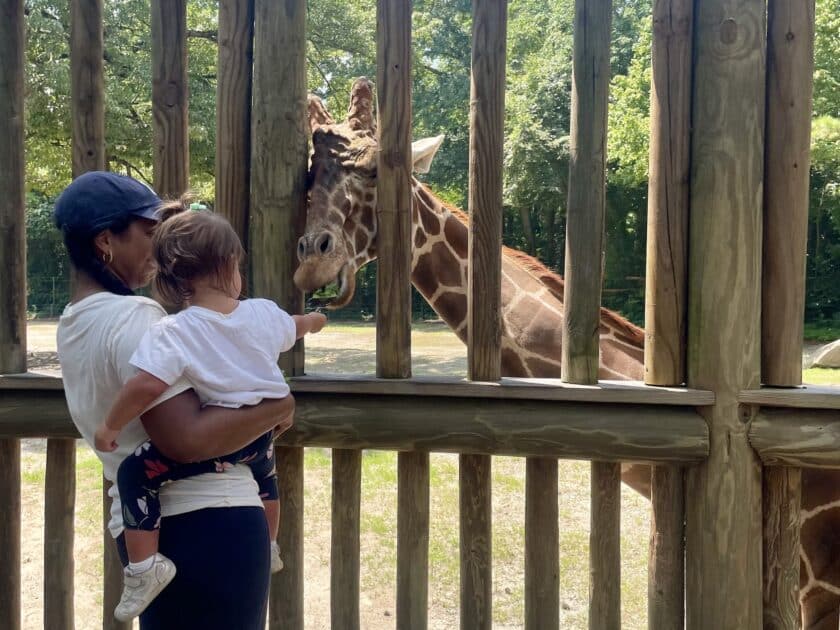
One of our favorite activities at the zoo is the Riverbanks Zoo giraffe fedding!
There’s a platform next to the habitat where the giraffes can approach and eat lettuce directly from your hand through some vertical wooden posts.
I think we first did the giraffe feeding at Riverbanks a few months after Aaliyah turned one, and she immediately got a kick out of it.
We do it at least once pretty much every visit now!
It’s always fun to see and hear her giggle as the giraffes snag the lettuce with their long tongues.
The giraffe feedings are open from 10 am to 2 pm.
There is usually at least one, and often two, happily snagging lettuce, but occasionally, there is food for them in other spaces around the habitat and they don’t come up to the platform.
I can only think of one time that happening in at least a dozen visits though, so it’s pretty rare. At least Bruce is always pretty keen to get some lettuce.
So, if that does happen, I’m sure you’ll find him by the feeding area a bit later if you come back.
The giraffe feeding at Riverbanks Zoo does have an additional cost.
As of this initial publication (see the date at the top), it costs 3 Explore More Credits (equivalent to $3). You can load credits on a membership card or buy individual feedings at a stand next to the feeding platform.
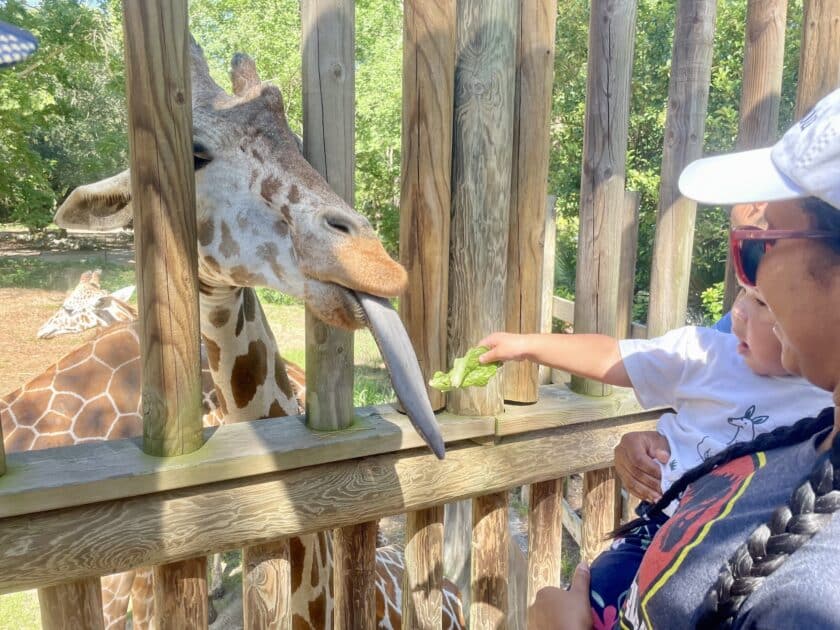
Each feeding includes a small bunch of 4 or 5 pieces of lettuce.
They usually let me buy 2 at a time and let Aaliyah do all of them herself. I can’t guarantee they will let you buy more than the number of people in your group though. I guess that might depend on what the line is like too.
In our experience, even on busy days when there is a longer line, it does tend to move pretty quick.
If you have an Explorer level membership to the zoo, you do get unlimited Riverbanks Zoo giraffe feedings along with unlimited rides and entrances to most other rides and attractions.
If you read my guide to the Rivebanks Zoo membership levels (linked near the top of this post), you’ll see I think this is well worth it if you have a child who enjoys feeding the giraffes as much as our little girl does.
The zoo also sells unlimited wristbands for individual visits for a price of $25.
Rhinos
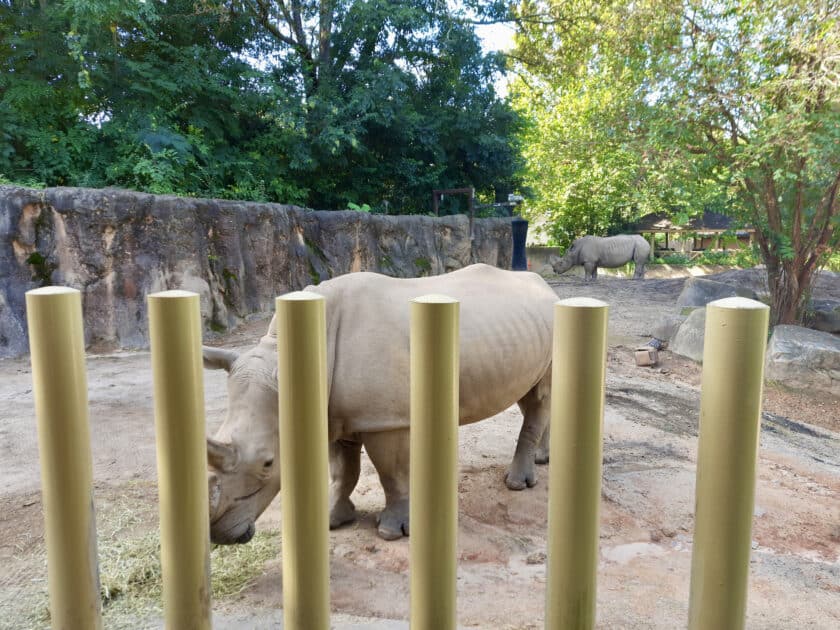
You’ll find the rhinoceros habitat between the giraffes and the outside viewing area of the gorilla habitat.
There are currently 3 white rhinos at Riverbanks Zoo, and they have a really large area and well done habitat.
Our experience is they like to congregate and nap near the edge on the far side of the habitat in the afternoon.

You can usually get a really good view of them there from the covered viewing area around the corner.
There’s also a really cool circular viewing area in the middle of their habitat, and they do spend a lot of time over there too.
I personally always enjoy seeing them get a back scratch from this giant metal thing that I guess is meant to mimic a tree nearby.
Meerkats

You’ll find the adorable meerkats in little habitat next to the rhinos and beside the Watering Hole concession stand (this is the concession stand that has craft beer on tap, by the way).
There’s a nice glass railing here where you can see them really well and they are often fairly active.
Baboons

You’ll find the baboons in between Butch the bear and the lions.
They have a fairly large habitat with a big tree house thing they can climb in.
I want to say there are 3-5 of them of different sizes, and they are often a bit lazier when it’s hotter around midday but are usually pretty active walking around and picking each other’s bugs in the mornings.
It’s not clear to me if they have a love or hate relationship with butt jokes, but I’d love to hear if they liked yours or not in the comments!
Komodo Dragon
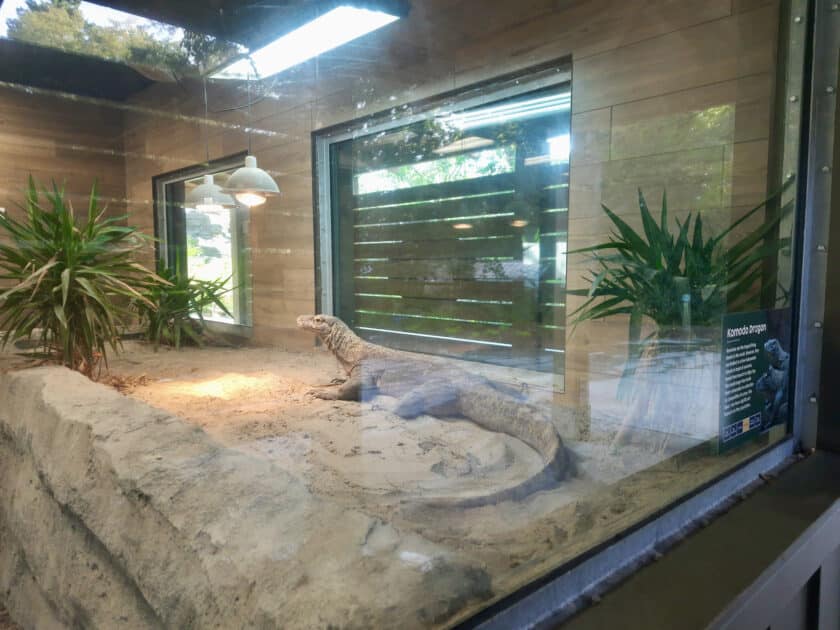
The Komodo Dragon exhibit was recently redone, maybe in 2023 or 2024. It’s a nice space, with a big outside area plus a good sized inside area.
You’ll find it next to the Koala house with the outdoor area visible from the deck of the koala house. There’s also a glass viewing of the outdoor area next door.
Walk around the corner, and you’ll find more glass to peer in on the inside viewing area.
Curiously, I’ve never actually seen the Komodos in the outside area. They usually are chilling under the heat lamps on the ledges inside when we visit.
There are a few small glass habitats with other snakes, lizards, and reptiles around the corner as well.
Siamang Monkeys
Oh, man, I remember there being tons of howler monkeys (I think?) here when I was a kid. It’s a cool rock island habitat surrounded by water that you can walk all the way around.
It’s located next to the Komodo Dragon habitat, down a little walkway from where the big cats are located.
Today, it houses siamangs, the largest species of gibbon. I’ve seen two here, and I don’t believe there are any more.
In our experience, it can be pretty hit or miss if they are visible. Sometimes they hide out in a little tree house thing at the top of their little island.
However, we’ve seen them crawling around on ropes between the two islands and also hanging out on some of the lower ledges.
They do have a pretty impressive call and their throats expand out, which is neat to see if they decide to do it as you go by.
Flamingos
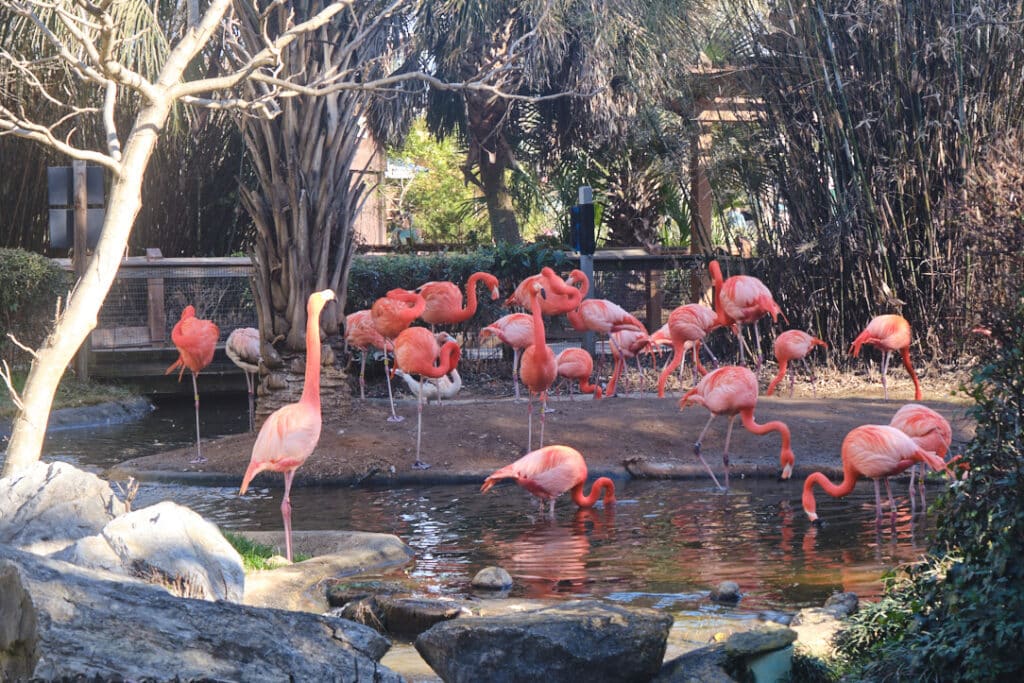
The flamingos have a big habitat just outside the bird house.
There are good observations areas outside the entrance to the birdhouse as well as on the far side if you go past the siamang habitat from the Komodo habitat.
There’s a good number of flamingos and if you’re lucky you can see them guarding eggs or chicks sometimes.
They can, of course, be a little stinky!
Penguins
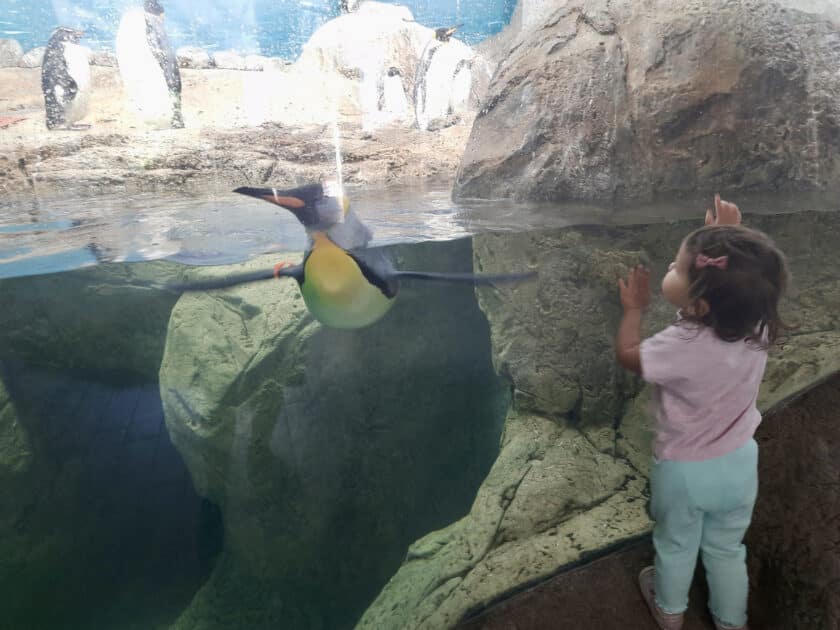
The main highlight inside the Birdhouse is definitely the penguins, who got an upgraded habitat in mid-2025.
There are King Penguins, which look a little similar to Emperor Penguins but are a bit smaller, and Rockhopper Penguins here.
There are a good number of each, and they are often pretty active.
The glass from the viewing area gives a pretty good view of both the surface of the rocks and underwater. There are even a few rocks kids can climb on to get a better view.
In the summer of 2025, they were doing penguin feedings at 11:30 and 3:30, but those times are subject to change.
If you get a zoo map when entering, it should have the current times listed, or you can also just ask a keeper (there are other feedings, enrichment activities, and feedings that are not always listed on the map, I assume because they are subject to more frequent changes).
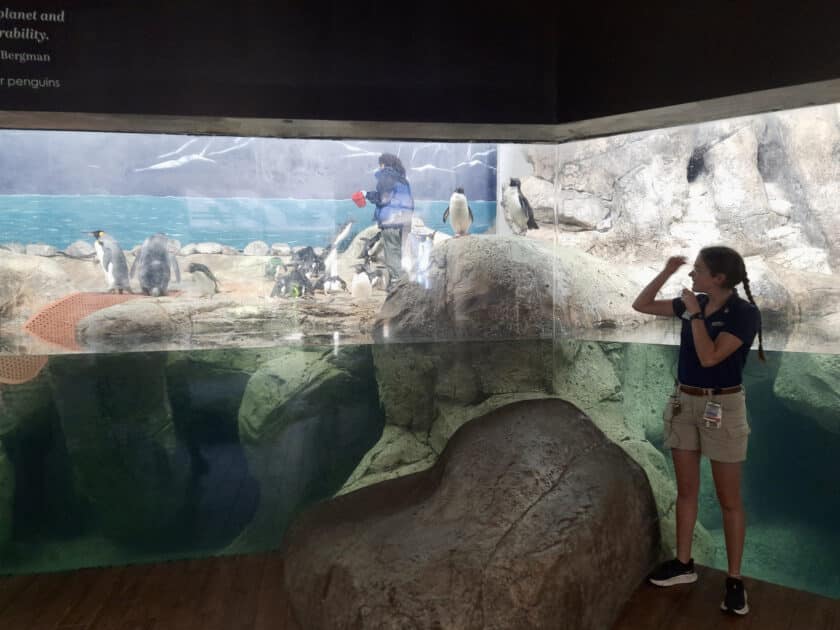
I’d say the penguin feedings at Riverbanks Zoo are definitely worth seeing.
A keeper gives a good presentation and the penguins are always very active.
In a nice touch, the keepers sometimes have little wristbands that match the color of the tags on each penguin and have kids see if they can find each one and learn their names.
So, it’s definitely worth checking out if you’re interested and happen to be around this area at the time of the penguin feeding at Riverbanks Zoo.
Other Birds Inside and Outside the Birdhouse
The rest of birdhouse is really well done, even if the penguins tend to steal the show and be what most people, especially kids, want to see.
There are several larger areas with a variety of birds in them, representing different types of habitats, I believe from different regions of the world.
I don’t have a complete list of what birds are in each, but I enjoy the colorful ones in the back habitat, the large pigeons in the middle habitat (opposite where the penguins are), and the big land bird in the front habitat.
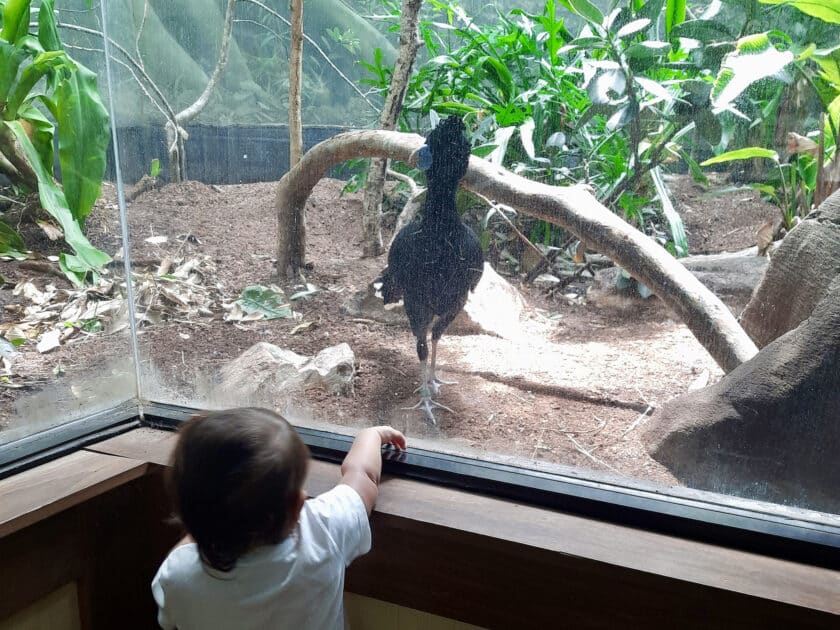
There are several smaller aviaries around the zoo as well that house different species of birds.
Our favorite is the Toucan, which can be seen on the pathway that cuts through the middle of the zoo around the backside of the birdhouse.
Next to it is a King Vulture, which has some cool orange colorings and I always remembered looking cool since seeing it at the aviary in Cartagena, Colombia when I lived there.
A bit further up, almost to the giraffes and around the corner from the reptile center there is a big aviary that has some cool looking owls. Look up in the trees, and they are usually visible, sort of like silent sentinels.

If you look through the trees diagonal and between from the giraffes and rhinos there is a pretty impressive Cinereous Vulture.
You can usually get a decent view through the trees if you are patient and willing to walk around to both sides of the habitat. I’ve never seen it moving around, so you have to really look closely.
Finally, there is one more small aviary across from the Kangaroo Walkabout down the path immediately to the left from the entrance that houses birds from Australia.
Kangaroos and Wallabies

I think the Kangaroo Walkabout is a really nice touch, and it’s the only “additional ride and attraction” that is included free with general admission to the zoo, no wristband or additional Explore Credits required.
You’ll go through a couple wooden doors and can follow a path through the middle of the habitat and get pretty close up views.
In our experience, the kangaroos tend to hang out towards the back of the habitat, to the right of the path, but the wallabies are sometimes up in the front to the left of the walkway.
We got to see a little wallaby joey on one visit, which was pretty neat!
Oh, and for what it’s worth, you can take a stroller into the Kangaroo Walkabout, which I didn’t realize for a long time.
Animals on Riverbanks Zoo’s Farm
The farm was always a highlight for me is a kid.
The cow and giant milking machine I remember seeing countless times is gone now, but there are plenty of goats, including one area you can enter and get up close to brush them.
Getting up close with the goats does cost $3 Explore More Credits or require a wristband (price last confirmed as of last updated date at the top of post).
You’ll find a pig nearby as well as llamas, alpacas, and more goats inside or on the far side of the barn.
Oh, and next to the farmhouse is actually the only family restroom I know of at Riverbanks Zoo.
So, it can be a good spot for a pit stop if you have little ones too. Plus, you’ll probably want a good hand washing after visiting the goats.
Zebra and Ostrich
Just past the farmyard, you’ll find a large habitat that is home to several ostriches and one zebra.
The zebra tends to either be at the far, back side of the habitat, or down the hill at the front where he can be hard to see without looking over the edge.
However, sometimes he is walking around.
The ostriches do tend to be walking around and are usually pretty visible.
I feel like they are sort of hidden in the back of the zoo and a bit of an afterthought for most people. So, I hope they get an upgraded habitat along with a few more zebras at some point down the road, considering the rhino and giraffe habitats nearby are so well done.
Alligator

There is currently only one alligator at Riverbanks Zoo.
I remember there being what seemed like tons of them back when I was a kid. You could get great views of them from the balcony seating at the restaurant, where we naturally always wanted to sit as kids!
The one left is really big though!
He’s usually hanging out on the little bank of his lake area and is usually easily visible from the little boardwalk that overlooks the water here opposite the edges of the giraffe and zebra habitats.
If he’s not there, look closely in the water!
Animals in the Riverbanks Zoo Reptile Exhibit
Speaking of gators, let’s talk another favorite of mine when I was a kid!
The new Riverbanks Zoo Reptile Exhibit, known as the Aquarium and Reptile Conservation Center, is really well done and opened in the Spring of 2025.
There are a variety of animals here, and I’m not going to pretend to have an exhaustive list, but I’ll walk you through some of the highlights of the animals in the reptile exhibit at Riverbanks Zoo in the sections below.
Tortoises
You’ll find a group of tortoises in the grassy area around the edges of the reptile center. You can see a couple more in the desert area to the right after entering the center.
Oh, I should also say, you can see giant Galapagos Tortoises in an area nearby on the path between Sea Lion Landing and around the Africa. I remember that being a highlight when I was a kid, but it’s sort of hidden away now.
Rattlesnakes
Right after entering, just across from the entrance, you’ll find a habitat with several big rattlesnakes along with another snake or two, including a corn snake.
While they are often pretty still, they are often pretty easy to spot.
Lizards, Monitors, and Frogs
Head right, and you’ll walk past several habitats housing monitor lizards, which can often be seen climbing up the trees in our experience.
There’s another habitat with colorful frogs.
There is supposedly a snake there too (a Bushmaster I think), but he’s good at camouflage, because I’ve never been able to spot him.
You can find more lizards, including iguanas, bearded dragons, and more in the desert area outside.
You can also find a few small glass cases with more frogs in the room that houses mostly snakes past the desert.
Anaconda
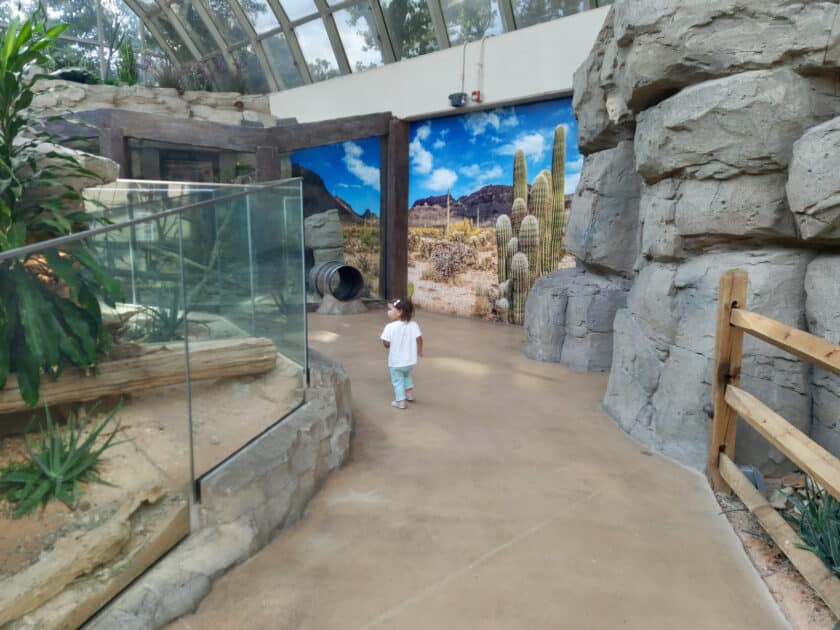
Just before heading out to the desert, there’s a large tank with two anacondas to the right.
They are often coiled up and being about as still as can be, but you can often get a good view of their bodies. With some luck and a good eye, you can often also their heads.
I’ll never forget seeing an anaconda in the wild on a wildlife safari in Casanare, Colombia, and always think they are a combination of neat and eerie to see.
Birds
As you step out into the desert, there’s a large area to the right where there are birds, some type of parrot or macaw I think because they are quite the squawkers!
More Rattlesnakes
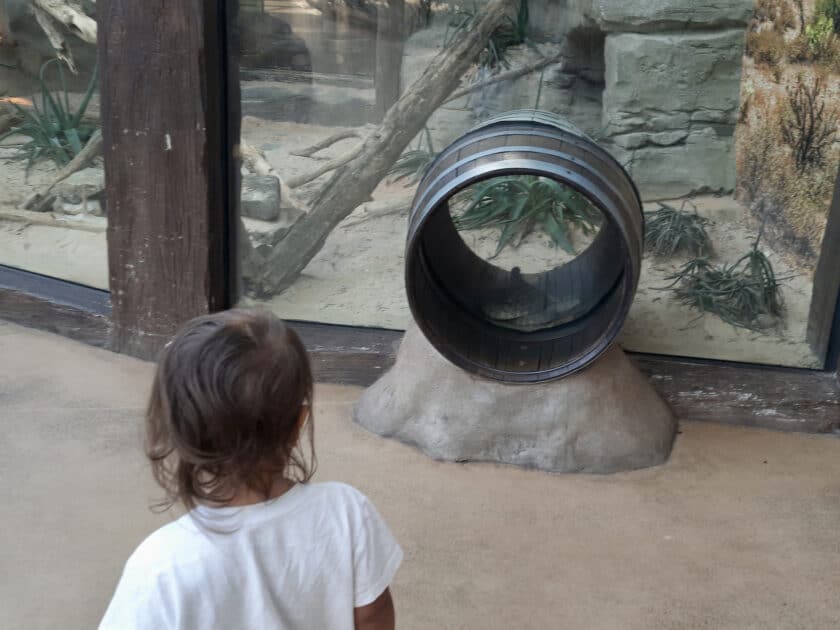
Past the birds, there’s a big habitat with lots of smaller rattlesnakes in it.
There are at least 5 or 6 and possibly more here. Honestly, it seems like a place out of Indiana Jones’s nightmares!
At least one or two are often moving around, and there are often some coiled up on top of each other.
There’s a cool little barrel as well as a box thing here kids can climb under and often get a face to face view with them too!
Gaboon Viper and Green Mamba
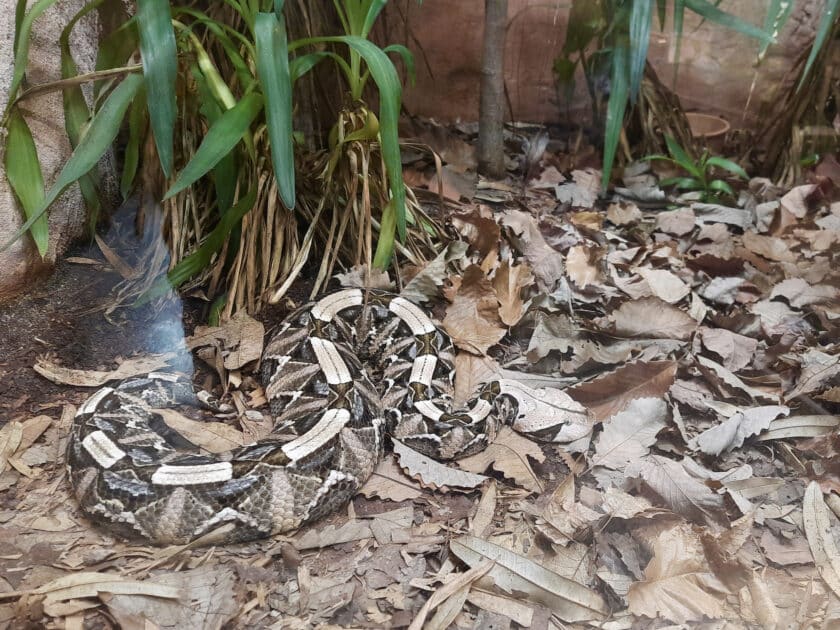
After you exit the desert area, you’ll come to a room that houses mostly vipers but some other snakes too.
Directly ahead after coming through the doors, there’s a habitat with a couple Gaboon Vipers and a Green Mamba.
The Gaboon Vipers, which are pretty odd looking fat snakes, can often be seen nestled among the leaves on the ground, a testament to just how good their camouflage is!
Meanwhile, the mamba, which always makes me think about reading the excellent Poisonwood Bible by Barbara Kingslover when I was in college, is sometimes visible in the trees but also often hiding somewhere. I’ve never been lucky enough to see it moving around.
Mangshan Pit Viper
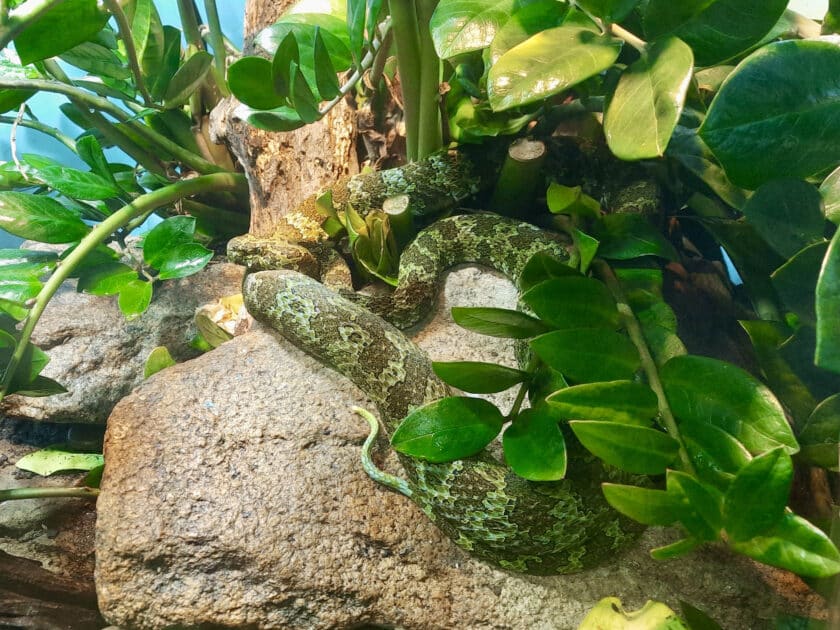
Opposite the Gaboon Vipers and Mamba, you’ll find the case housing this fascinating looking snake.
He can be hard to spot, but the green and black coloring is really neat. I think he’s one of my personal favorites to see at the moment.
Boelen Python
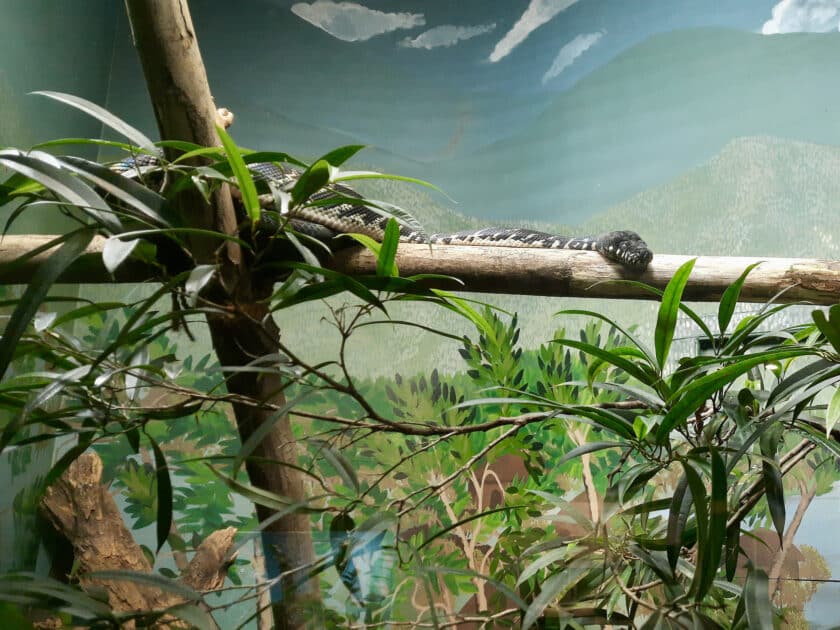
This guy’s black and yellow pattern is pretty cool looking too.
You’ll find him immediately to the left when entering this room from the desert area.
He can be hard to spot because he blends in pretty well, but we got a treat seeing him spread out on a branch one day.
King Cobra
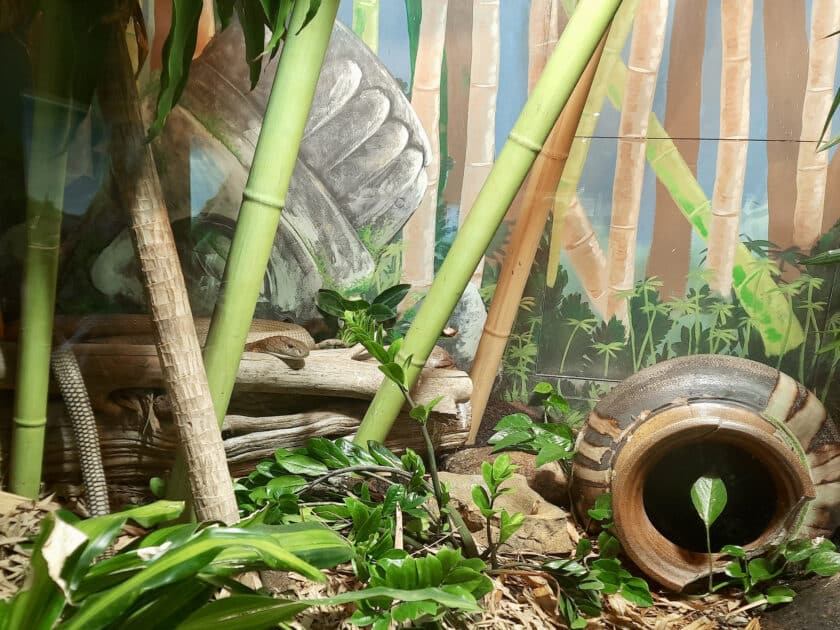
We were (or well, at least I was) really excited to actually see the King Cobra on a recent visit.
It’s usually hidden pretty well and you’re lucky to even get a glimpse of some of it’s body, but it was actually sitting with its head visible!
It’s definitely a big snake!
You’ll find it in a case nesteld in the corner on the far left after entering the room off the desert.
Note that there are some other smaller vipers, including a few cool looking ones, in the cases between the Boelen Python and the Kind Cobra.
To the right of the King Cobra, there is another smaller case with a juvenile King Cobra. I’ve never been fortunate to catch much of glimpse beyond just a small section of its scaly body though.
Cottonmouth
After you exit the aquarium section (more on that next) back out to the room where the entrance and exit doors are located, you’ll find a large glass barrier overlooking the Cottonmouth exhibit.
There are two cottonmouths in here, and the glass lets you see them both in the water or on land.
They are sometimes coiled up in the back, behind a tree and hard to spot, but they are sometimes closer to the front and more visible and occasionally move around.
Snapping Turtle
Just past the cottonmouths, there is a large tank with a snapping turtle.
It’s a cool looking animal!
It sometimes is swimming around a bit and is sometimes perfectly still. You can occasionally see it with its big mouth open, which is neat to see.
Riverbanks Zoo Aquarium Exhibit
The aquarium is now part of the reptile center at Riverbanks Zoo.
You’ll find it in the 4th room as you make the loop around the building, beyond the smaller room of snakes after the desert where the vipers and King Cobra are located.
The aquarium is set up as one large, winding room with a huge tank in the center with several viewing areas along with smaller tanks scattered around the exhibit.
I’m not well versed enough in fish species to pretend to give you a full list of all the ones that are housed here, but you can find a good mix of smaller and larger species in the main tank.
There was at least one small sea turtle we’ve spotted a few times, although according to this news article, it sounds like he may have been recently released into the wild and no longer here.
In the other tanks, you’ll find a tank with lion fish, at least one with clown fish along with a couple dories, of course, and there is a tank with some small sharks as well.
Oh, and in a nice touch that reminds me of my own childhood, there is a little dome thing kids can climb up into with a natural echo that makes you feel like you’re under the sea.
Past that, you’ll find a tank for an octopus, and then a cool, eerie looking tank with jellyfish floating around.
Aquarium Talk
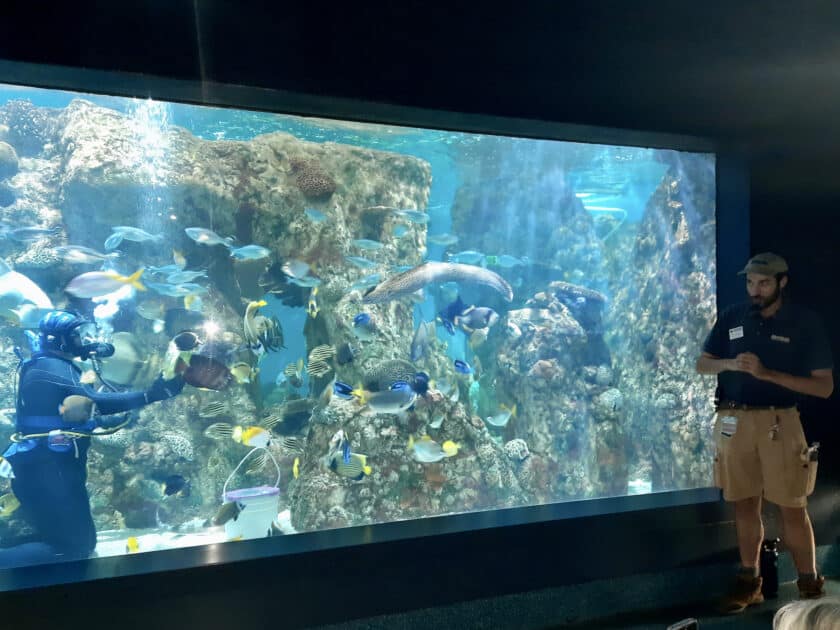
We did catch the aquarium presentation on one visit. It takes place on the far side of the big, central tank where there is a small amphitheater style seating area..
I noted it took place at 12:00 the day we caught it, but it’s probably worth confirming that either by looking on a map, available when you enter the zoo, or asking a keeper.
Animals in the Conservation Outpost aka “Monkey Cave”
I always refer to this as the “monkey cave,” which is probably a misnomer since monkeys make up less than half the animals housed here.
It does seem like a cave though!
It’s a long covered area with dim lights, and a number of small habitats visible through glass to the left as you walk through it.
It’ll take you from the inside viewing area of the gorilla habitat around to where the meerkats, the outside viewing area for the gorillas, and the rhinos are.
This does seem to be the area where exhibits seem to change slightly most frequently. There are a number of new animals to Riverbanks Zoo housed here, and some of the sensitive animals in this area are sometimes taken off exhibit.
So, just keep in mind, that while I try to keep this updated, it’s possible you’ll see other animals or an empty habitat or two here. I’m sure I’ve left off an animal or two too.
Lemurs
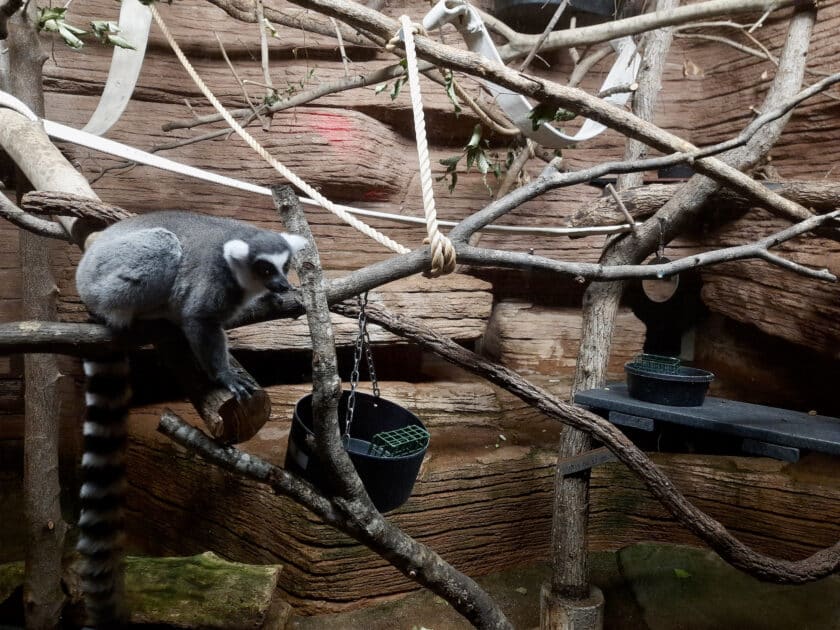
There are regular, gray and black lemurs here in one habitat, plus red ruffed lemurs in another.
Both types of lemurs are usually pretty easy to spot.
They are sometimes sleeping or hiding, but you can usually see them, and they do move around a good bit throughout the day.
Squirrel Monkeys
This is another monkey we use to see a lot when we were traveling and living in Colombia, South America. I’ll never forget having them jump on us on this little island near Leticia, in Colombia’s Amazon.
There are a small handful in the habitat here at Riverbanks Zoo. If you don’t see any at first, be sure to look up towards the top of the habitat, as they do sometimes climb up there.
We usually have pretty good luck seeing at least a couple of them moving around, and they are pretty darn cute.
Geoffrey’s Marmoset
Besides having one of the more unique names of any animal at Riverbanks Zoo, Geoffrey’s Marmoset, a small species of monkey, is one of the more unique looking ones too!
They have this sort of wise, elder looking face, and it often seems like they’re looking at you, piercing into your soul.
They remind me of Gandalf.
Hard to know if they’re taking pity or trying to offer you some kind of deep wisdom.
Or, maybe they’re just telling you to keep it secret, keep it safe.
Sloth
There is a sloth, along with another monkey that looks similar to the Geoffrey’s Marmosets in the final exhibit here.
In our experience the sloth is rarely out and easily spotted, much less moving around (it is a sloth, after all).
We have spotted its toes hanging out of the hammock thing that is in the upper part of the habitat, left of center though.
Fishing Cats
These are pretty cool looking predatory cats.
There was just one, but the zoo welcomed a second around mid-2025.
We’ve had luck seeing them prowl around on some visits, but have also spotted them sleeping, sometimes hiding in a box or up on one of the ledges in their habitat.
They also do sometimes go and hide in their back area.
Sand Cat
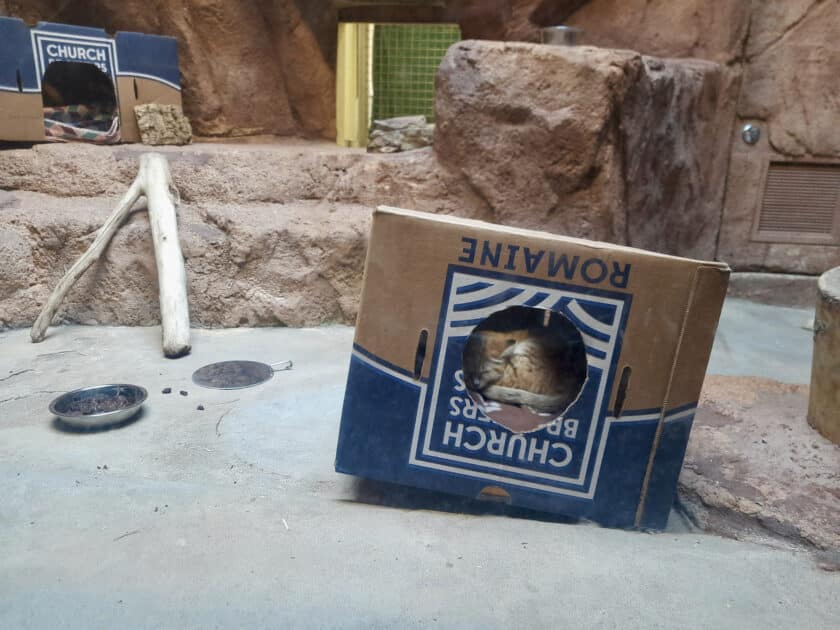
The award for the cutest Riverbanks Zoo new animal has to be the sand cat!
This tiny desert dwelling cat is smaller than most house cats. It’s a current Aaliyah favorite, and she just calls it the kitty cat.
Since they are so new and appear to be acclimating, they are often hiding in little cardboard boxes or in their back area.
So, look closely, because they are really cute curled up and sleeping. I haven’t really seen them moving around much yet, so it’s possible they aren’t as cute in action, but I wouldn’t bet on it.
Where are Riverbanks Zoo’s elephants?
There had been elephants at Riverbanks Zoo as long as I could remember. I seem to even remember getting to meet them up close during a zoo camp or something as a kid.
In fact, I remember visiting the zoo with Susana sometime in the late 20-teens and there were definitely still elephants.
According to this article from The State, the last of the elephants at Riverbanks Zoo was permanently moved in late 2019.
The old elephant habitat was renovated into the current rhinoceros habitat.
I was surprised to see Riverbanks was listed by In Defense of Animals as one of the worst zoo’s for elephants. I enjoy zoos, but do recognize there are some tricky moral issues around them.
I do think overall Riverbanks seems like a pretty good and humane zoo overall. That’s why seeing that was so surprising.
So, it sounds like the decision to no longer have elephants at Riverbanks Zoo was definitely the correct one!
If you do want to see elephants, the closest zoo to Columbia with them is at the excellent North Carolina Zoo, in Ashboro, about three hours away.
Elephants were Aaliyah’s first favorite animal, and she still loves them even if bears have supplanted them as the current favorite.
So, we were really happy to get to take her there, and I’d recommend checking it out if you are disappointed you can no longer see any Riverbanks Zoo elephants.
What happened to Riverbanks Zoo’s polar bear?
Oh, the polar bear at Riverbanks Zoo was always a favorite of mine, and to be honest, I think of just about everyone when I was a kid too.
According to this Facebook post, there were polar bears at Riverbanks Zoo for nearly 30 years, but this page celebrating the zoo’s 50th anniversary, states they joined many other zoos around the southeast in no longer housing polar bears due to the hot summers beginning in 2001.
For what it’s worth, you can find a polar bear at the North Carolina Zoo too. I guess since it’s in the mountains, the summer is a bit milder and more hospitable there. It does have a terrific habitat with lots of different viewing areas.
Animals Possibly Coming Soon to Riverbanks Zoo
Riverbanks Zoo has a huge expansion project currently underway called Bridge to the Wild.
In fact, the rhino habitat, the new reptile center, and the new Komodo Dragon habitat, as well as the Saluda Skyride cable cars were all part of the initial phases of this expansion.
The project will eventually bring animal exhibits to the West Columbia/Cayce side of the river, where only the Botanical Gardens are located now.
According to this page on the zoo’s website, there will be a larger set of big cat exhibits as part of the Bridge to the Wild exhibit. This will presumably be where the new lions are located, and I’d imagine the tiger will move there too.
That page also lists a primate forest and red panda habitat among the planned expansions for new animals at Riverbanks Zoo, in addition to a riverfront restaurant.
This video from the zoo’s Facebook specifically mentions orangutans as among the animals set to call the primate forest home.
According to this press release on the zoo’s website, Riverbanks Zoo new animals that will be part of this expansion also include black bears, red wolves, and bald eagles.
So, it sounds like there will be some wonderful new additions to the list of animals at Riverbanks Zoo once the expansion is complete!
What animals at Riverbanks Zoo will you see?
Now you have a complete guide to the Riverbanks Zoo animals you can see on a visit, including some information on why you might not see some animals anymore and which Riverbanks Zoo new animals you can expect in the future.
I hope you found this post useful in planning a visit. I’d love to hear which are your favorites on the list of animals at Riverbanks Zoo in the comments below!
Most of all, I hope you enjoy the zoo as much as we do!
Cheers and Happy Exploring!